
Shellfish vs Finfish: Growth Potential in Irish Aquaculture


Introduction
Irish aquaculture is quietly becoming one of the most important parts of our rural coastal economy, yet it rarely gets the same attention as beef or dairy. In value terms, the sector is now worth around €180–€200 million a year, supports over 2,000 direct jobs, and underpins many more in processing, transport, engineering and services along the coast.
At the heart of that growth debate sits one big question:
Is the future of Irish aquaculture in shellfish or finfish?
Both sectors are growing, both face real constraints, and both offer different kinds of opportunity. But the pace, the risk profile, and the regulatory hurdles are not the same.
The Lay of the Land in 2025
Irish aquaculture now produces roughly 45,000–50,000 tonnes of shellfish annually, compared with about 15,000–18,000 tonnes of finfish, mostly Atlantic salmon. In value terms, shellfish and finfish are more evenly matched than the tonnage would suggest. Shellfish account for slightly over half of production by value, with finfish close behind.
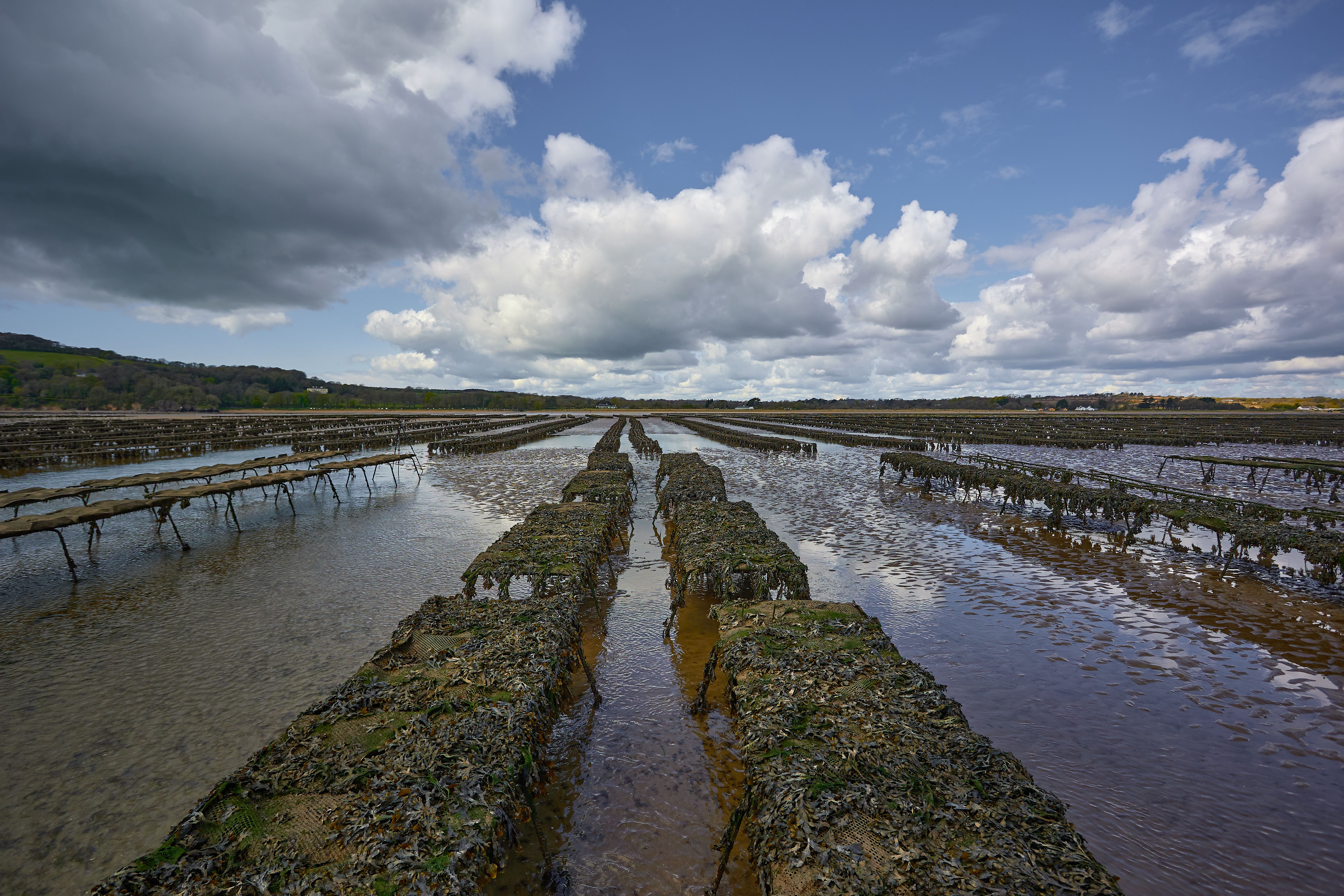
Shellfish farming is dominated by rope-grown mussels, oysters and bottom-grown clams, with mussels representing the bulk of volume. Finfish farming, by contrast, is overwhelmingly focused on salmon, with a small amount of trout.
In simple terms:
- Shellfish = high volume, lower unit value.
- Finfish = lower volume, higher value per tonne.
Why Shellfish Has Been Scaling Faster
Shellfish has quietly become the backbone of Irish aquaculture growth. Mussel production alone has doubled over the last decade, and Ireland now ranks among the larger mussel producers in northern Europe.
There are a few straightforward reasons for this:
Shellfish farming requires no external feed input, because mussels and oysters grow by filtering naturally occurring plankton. That keeps running costs relatively low and shields producers from global feed price shocks. In contrast, salmon feed costs rose sharply over the past five years due to grain, fishmeal and energy prices.
Shellfish also align neatly with climate and biodiversity targets. They actively remove nutrients from the water and improve water clarity, making them politically easier to support.
Crucially, shellfish farms tend to be smaller, family-run operations, meaning growth is often incremental and community-based rather than capital-intensive. A new mussel or oyster unit might cost tens or hundreds of thousands to establish, not tens of millions.
From an export perspective, Irish shellfish is in strong demand across France, Spain, Italy and the Benelux countries, where Irish rope mussels are seen as a premium cold-water product.
All of this makes shellfish the easier sector to expand in practice, even when licensing moves slowly.
Finfish: High Value, High Resistance
Finfish tells a very different story. Salmon farming contributes €70–€90 million annually to the Irish economy from production alone. Yet production volumes have remained relatively flat for more than a decade.
The reasons are not economic. Demand for farmed salmon continues to grow across Europe and globally. The barriers are almost entirely regulatory and social.
New salmon licences in Ireland often take 8–12 years or longer to progress due to overlapping environmental designations, legal challenges and planning delays. Even where sites already exist, expanding biomass limits is extremely difficult.
Capital exposure is also much higher. A modern salmon site, with cages, feed systems, boats and processing infrastructure, carries multi-million-euro setup costs before a single fish is sold. Once stocked, farmers carry biological risk for 18–24 months before harvest.
The reward can be strong, but volatility is real. Disease pressure, sea lice control, temperature stress and storm exposure all sit alongside market fluctuations in salmon prices.
As a result, while finfish generates large turnover per farm, growth at national level has been slow and politically sensitive.
Licensing: The Shared Brake on Both Sectors
No matter which side of aquaculture you look at, the single biggest constraint on growth is licensing.
Ireland currently has hundreds of licence applications backlogged, many of them for shellfish sites that could scale production quickly if approvals moved faster. Even where environmental assessments are completed, legal challenges can delay activation for years.
Finfish faces an even tougher version of the same problem. Because salmon sites are larger and more visually prominent, opposition tends to be stronger, and the planning burden heavier.
This means that real-world aquaculture growth in Ireland is being dictated less by market demand and more by administrative capacity.
Where the Near-Term Growth Really Sits
Over the next five to ten years, almost all practical production growth in Irish aquaculture is expected to come from shellfish, not finfish.
The reasons are blunt:
- Shellfish units can scale incrementally.
- They are easier to insure and finance.
- They face lower biological losses.
- They carry significantly less public opposition.
- They align naturally with nutrient-reduction and water-quality policy goals.
Finfish growth, by contrast, will likely remain slow and uneven unless national licensing reform accelerates sharply. The demand exists. The capital is available. The bottleneck is permission, not markets.
What This Means for Coastal Farm Families
For families already in shellfish, the opportunity is scale and diversification:
adding lines, diversifying species, or building small-scale on-shore depuration and packing to retain more value locally.
For those looking to enter aquaculture from farming or fishing backgrounds, shellfish represents the lowest-risk entry point, financially and biologically.
Finfish remains attractive for corporate-scale investment and contracted marine services: feed supply, vessel work, net cleaning, engineering and processing. Even where salmon numbers stay flat, the secondary economy around finfish continues to expand.
This creates two very different rural development models:
- Shellfish = distributed, locally embedded growth.
- Finfish = concentrated, high-capital industrial growth.
Both matter. But they deliver value to the coast in different ways.
Conclusion
Ireland’s aquaculture future will not be built on one species or one model. Shellfish is doing the heavy lifting on volume, employment and export growth right now. Finfish still delivers major economic punch per site, but remains throttled by regulation and public resistance.
The real growth potential, in purely practical terms, sits with shellfish over the next decade. It fits the policy direction, the capital reality, and the risk appetite of coastal families.
Finfish may yet surge again, but only if licensing reform and social consent finally catch up with global demand.
For now, Ireland’s quiet blue-economy expansion is being powered not by cages of salmon, but by long lines of mussels and rows of oysters, steady, incremental, and rooted firmly in coastal communities.
*By Anne Hayden MSc., Founder, The Informed Farmer Consultancy.